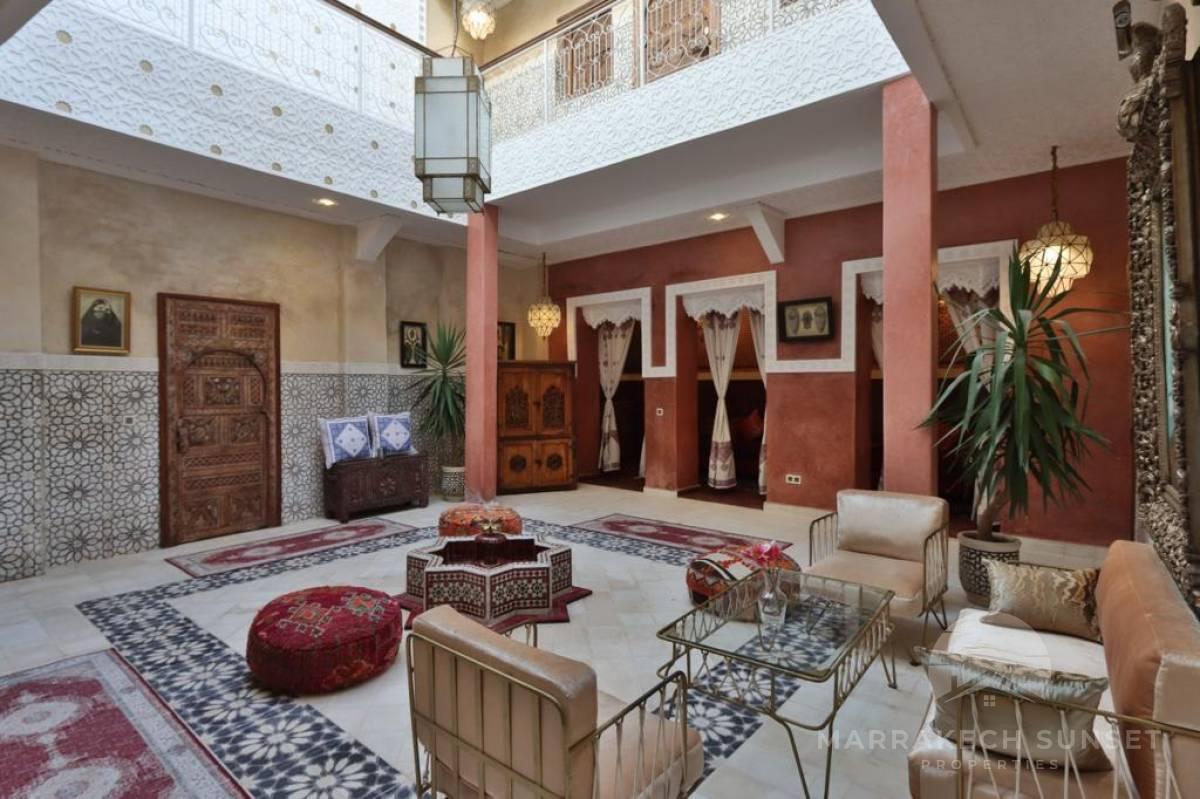


How to Renovate a Riad in the Medina: Key Steps for a Successful Transformation
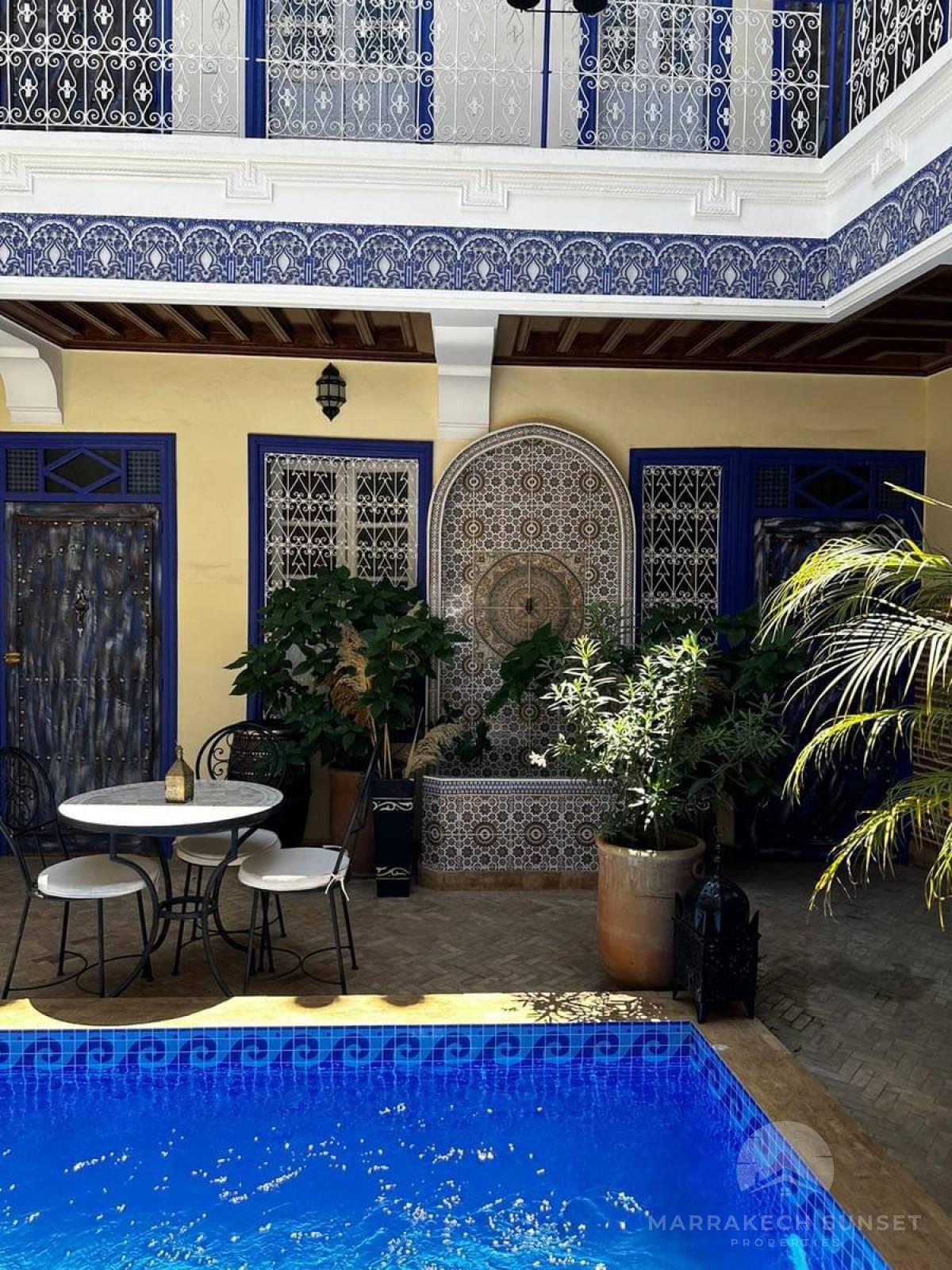
The Medina of Marrakech, with its millennial alleys and ochre earth walls, exerts an undeniable fascination on investors from all over the world. Acquiring a Riad for sale Marrakech is often the beginning of an extraordinary human and architectural adventure. However, transforming a historic residence into a modern luxury sanctuary cannot be improvised. In 2026, as standards for comfort and sustainability reach new heights, Riad renovation Marrakech requires expertise that combines respect for tradition with technological mastery.
This massive dossier aims to guide you through the meanders of rehabilitation. Whether you are aiming for a private residence or the operation of a Medina guest house, every decision made during the construction process will have a direct impact on the value of your asset and your quality of life. Between the study of ancestral structures and the latest trends in interior design, here is the complete journey to bring the soul of Marrakech back to life.
The Foundation – Understanding Architecture and Building State
Before laying the first brick, it is imperative to study the DNA of the residence. Traditional Moroccan architecture in the Medina is based on specific bioclimatic and structural principles that must be understood to avoid making irreparable mistakes.
Original Materials: Between Earth and Lime
Most old riads are built of "Tabia" (rammed earth) or terracotta bricks. These materials are alive; they breathe. One of the most common mistakes during a Riad renovation Marrakech is the massive use of cement, which traps moisture and eventually causes old structures to burst.
- Tadelakt: A lime plaster polished with a river stone, emblematic of Marrakech, which ensures waterproofing while allowing the wall to breathe.
- Atlas Cedar: Used for ceilings (Zouak) and monumental doors, it is naturally resistant to insects if well maintained.
Structural Diagnosis: The Ruin's "Check-up"
If you buy a ruin through our Marrakech real estate expertise, the first step is to check:
- Wall Plumbness: In the Medina, houses support each other. A leaning wall may indicate a weakness in the neighbor's property.
- State of Foundations: Often non-existent or basic, they must be reinforced by underpinning if you plan to add a floor or a swimming pool on the terrace.
- Rising Damp: The scourge of the Medina. A precise diagnosis will determine whether to inject resins or create a waterproof barrier.
Administrative and Legal Phase – Securing Your Project
Renovating in a UNESCO-listed historic zone imposes a strict regulatory framework. Skipping these steps exposes you to construction stops or the inability to resell your property later.
Authorizations and Building Permits
Even for light renovation, approval from the authorities is required.
- The Architect: Must be registered with the Moroccan Order of Architects. Their role is to translate your vision while respecting the constraints of Moroccan architecture (wall heights, conservation of openings).
- Renovation Permit: Issued by the Municipality and the Urban Agency. It defines what you are allowed to modify (adding windows, creating a patio pool, arranging the terrace).
- Civil Protection: Essential if your project is a Medina guest house, as fire safety standards are very specific in the Medina.
Managing the Land Title During Works
It is crucial that your Marrakech real estate investment is secured by a "clean" land title. During renovation, ensure that structural modifications are reported on the cadastral plans to avoid any discrepancies when closing the occupancy permit file.
Structural Work and Modernization – Technical Challenges
Once authorizations are obtained, the construction site enters its critical phase. In 2026, the trend is the "Smart Riad": an old shell for state-of-the-art technology.
Sanitation and Plumbing: Starting from Scratch
The Medina's drainage networks are often old. A serious renovation involves:
- Total replacement of pipes to the main collector.
- Installation of pumping systems for upper-floor drains.
- Integration of hybrid solar water heaters, now an essential standard for sustainability.
Electricity and Home Automation: The Invisibility of Luxury
The challenge is to run miles of cables through 60 cm thick walls without detracting from the aesthetics.
- Lighting Design: In the Medina, natural light is zenithal (via the patio). Modern interior design uses indirect LED lighting to highlight arches and Marrakech Tadelakt textures without glaring.
- Connectivity: Fiber optics are now available in much of the Medina. Plan for mesh Wi-Fi access points so the signal can pass through massive walls.
|
Work Item |
2026 Priority |
Impact on Value |
|---|---|---|
|
Terrace Waterproofing |
10/10 |
Crucial (damage prevention) |
|
Thermal Insulation |
9/10 |
Energy savings (comfort) |
|
Home Automation / Wi-Fi |
8/10 |
Rental attractiveness |
Aesthetics and Finishes – The Art of the Hand and Detail
This is where your project takes on its full emotional dimension. Successful renovation is that which knows how to marry classical Moroccan architecture with clean contemporary lines.
Craftsmanship at the Heart of Design
Marrakech is the world's conservatory of art trades. For your interior design, prioritize the work of Maâlems (master craftsmen):
- Zellige: These small glazed terracotta mosaics. In 2026, they are used more soberly, with fine joints and natural shades (sand, forest green).
- Carved Plaster (Gebs): For friezes and domes, it brings incomparable depth to ceilings.
- Wrought Iron: Essential for railings and lanterns, it must be treated against corrosion to last.
Tadelakt: The Signature of Marrakesh
Nothing replaces the silky touch of Marrakech Tadelakt. It is used in bathrooms (private Hammam) as well as on patio walls for its ability to reflect light softly. Its application is an artistic performance that requires days of intense manual labor.
Marrakech Sunset Expert Tip: Do not seek industrial perfection. The charm of a riad lies in its irregularities, its walls that are not quite straight, and the patina of natural materials. It is this "imperfection" that creates the soul of the place.
Costs and Renovation Statistics in 2026
The renovation market has evolved. The costs of noble materials and specialized labor have followed the inflation of the global real estate market.
Average Budget per Square Meter
- Standard Renovation (Refreshing): 6,000 - 8,000 DH / m².
- Heavy Renovation (Total Restructuring): 10,000 - 15,000 DH / m².
- Luxury Renovation (Prestige & Automation): 18,000 DH / m² and beyond.
Profitability Statistics
A well-conducted Riad renovation Marrakech generates immediate added value. In 2025, renovated properties in the Medina sold for an average of 35% more than the cost price (ruin purchase + works). Furthermore, the rental yield of a 5-bedroom Medina guest house fluctuates between 12% and 15% net per year.
Case Study – The Metamorphosis of Riad "Selene"
To illustrate our point, let's analyze the transformation of a 120 m² ground-floor residence located in Mouassine.
- Initial State: Ruin with collapsed ceilings, massive humidity.
- The Project: Creation of a 3-suite riad with a patio pool and a green rooftop.
- Design Touch: Mix of pearl gray polished concrete and traditional Moroccan architecture (stripped cedar wood doors).
- Result: An ultra-contemporary property that respects the history of the place. Today, this riad boasts an 85% occupancy rate with an average nightly price of 2,800 DH.
The Next Wave – Towards Eco-Renovation and Sustainability
The future of the Medina passes through respect for resources. In 2026, renovation must be responsible.
Energy Efficiency of Old Buildings
Contrary to popular belief, earth is an exceptional insulator. By preserving wall thickness and using natural coatings, air conditioning needs can be reduced by 40%. The installation of "invisible" solar panels on terraces now covers a large part of domestic hot water needs.
Materials Recycling
A strong trend in interior design consists of reusing old structural timbers to manufacture custom furniture or crushing earth rubble to recreate coatings. This is the very essence of circular renovation.
Frequently Asked Questions from Investors
Is it possible to install a swimming pool on the terrace?
Yes, subject to a concrete structure study. It is often necessary to reinforce ground-floor pillars down to the foundations to support the weight of the water (1m³ = 1 ton).
How long does a complete renovation take?
For a medium-sized riad (150-200 m² ground floor), allow between 10 and 16 months. Unforeseen events related to shared walls and foundations are common in the Medina.
How to find trustworthy craftsmen?
This is the role of your project manager or your Marrakech real estate expertise provider. We have a network of Maâlems whose work quality we have audited on numerous sites.
Can I renovate without being on site?
It is possible with a good architect and weekly reports (videos, photos). However, we recommend a monthly visit to validate finishes and material choices (zelliges, lime colors).
Checklist for Your Construction Site in the Medina
- Legal Verification: Updated land title and property certificate.
- Structural Audit: Study of soil and verticality of shared walls.
- Budget Validation: Plan a 15% reserve for Medina contingencies.
- Material Choice: Selection of Marrakech Tadelakt and zellige samples.
- Administrative File: Filing the building permit and road occupancy authorization (for rubble).
Renovating a riad is an act of passion that requires patience and rigor. By respecting the codes of Moroccan architecture while injecting your vision of modern comfort, you create a unique asset in the world. For every step of this journey, the experts at Marrakech Sunset are there to guarantee the durability of your investment and the excellence of your realization.